
Best ceramic cookware: full-ceramic vs ceramic-coated, ranked
Ceramic cookware splits into full-ceramic and ceramic-coated, and the difference decides how long it stays safe. We ranked both on materials, durability, and value.
By The PlasticFreeLab TeamUpdated June 28, 202613 min read
Disclosure·PlasticFreeLab tests and recommends independently. We sometimes earn a commission when you buy through our links. It never affects our rankings.
How the 88/100 was earned.
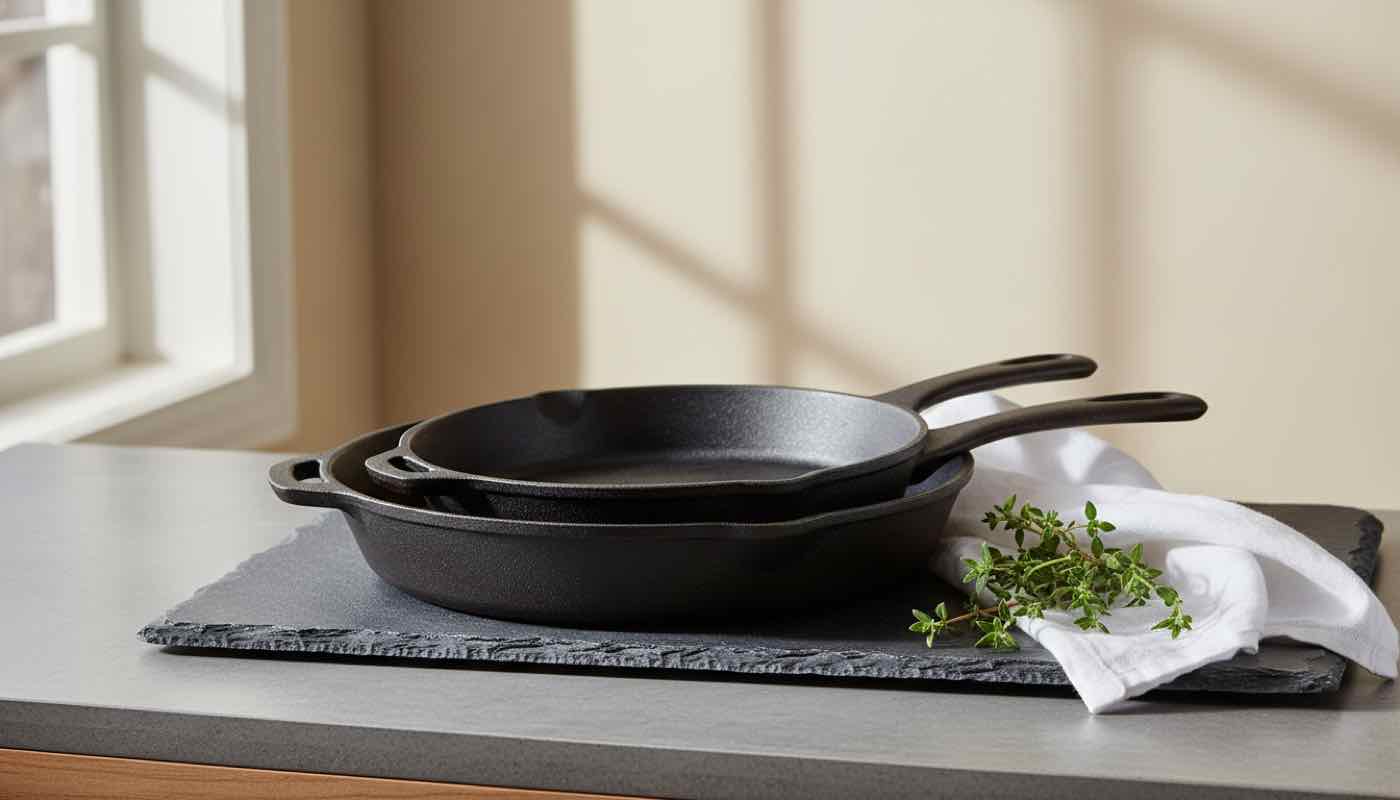
Xtrema Pure Ceramic Cookware
Xtrema is full ceramic, not ceramic-coated, and that distinction is the whole story. There is no metal core beneath a coating that can chip and expose what is underneath, and independent lab tests confirm no detectable lead, cadmium, or aluminium leaching at cooking temperatures. It heats slowly and can crack on thermal shock, which are real tradeoffs, but for zero coating to fail and zero metal-to-food contact, it is the most defensible ceramic option we found.
Everything we'd buy, in order.
- 01Best overall (full ceramic)90
Xtrema Pure Ceramic
Single-piece ceramic with no metal core and no applied coating, so there is nothing to chip, scratch, or wear through. Independent lab tests, published by the brand, confirm no detectable lead, cadmium, or aluminium leaching at cooking temperatures. It heats slowly, holds heat well, and will crack if you thermal-shock it with cold water while hot. Not cheap. For people who want genuinely zero metal-to-food contact, it is the most rigorous option in the category.
SponsoredCheck Direct - 02Best coated ceramic84
Caraway Ceramic-Coated Set
An aluminium body with a sol-gel ceramic coating, free of PFAS, PFOA, and PTFE, third-party tested for lead and cadmium below detection. It is genuinely non-toxic when new and the most attractive, easy-to-use set in the category. The caveat is the standard one for all coated ceramic: the coating degrades with normal use, typically over 12 to 24 months, after which you are cooking on the aluminium beneath. Hand-wash, no metal utensils, and accept it as a replaceable item, not an heirloom.
SponsoredCheck Caraway - 03Best value coated82
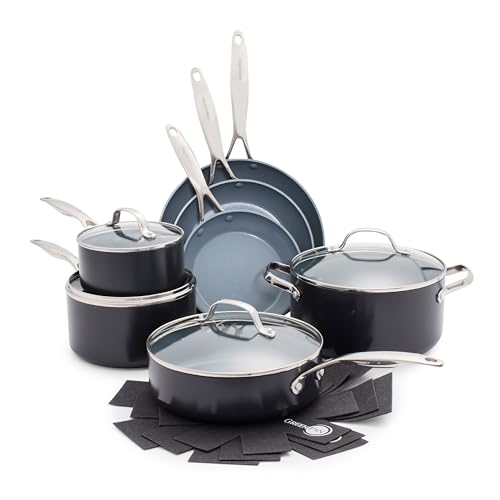
GreenPan Valencia Pro Ceramic Set
A Thermolon ceramic coating over a hard-anodized base, which gives it better durability than most coated ceramic and PFAS-free construction. It is the value pick: most of Caraway's non-toxic benefits at a lower price, with the same eventual-coating-wear caveat. Hard-anodized base resists warping better than thin aluminium. Treat it, like all coated ceramic, as a multi-year consumable rather than a lifetime pan.
 SponsoredCheck Amazon
 - 04Honorable mention80
Our Place Always Pan (ceramic-coated)
A well-designed single pan with a PFAS-free sol-gel ceramic coating that replaces several pieces. The design and versatility are genuinely good, and it is non-toxic when new. The same coated-ceramic lifespan caveat applies, and at this price the durability ceiling is the main reason it is not higher. A reasonable buy if the all-in-one format suits how you cook, with eyes open about replacing it in a couple of years.
SponsoredCheck Amazon
Named, not hinted at.
Unbranded marketplace ceramic sets
Skip55The cheap ceramic-coated sets sold under rotating marketplace brand names rarely publish any lead, cadmium, or coating-composition testing, and the coating quality is inconsistent. Without test data you cannot verify the non-toxic claim, which is the entire reason to buy ceramic. Spend the same money on a Lodge cast-iron pan, or step up to a documented brand. If a ceramic set has no published testing, treat the non-toxic label as marketing.
How this comparison was made
- What we picked for
- Disclosed materials, third-party certification, durability in real cooking, independent contamination testing where available.
- How we evaluated
- Manufacturer disclosures, regulatory filings, peer-reviewed papers, and hands-on wear-testing. We read the labels and the filings, not the press releases.
- Who disagrees with us
- We steel-man the opposing view in every comparison, and name the brand we almost picked and the reason we didn't.
- What would change our mind
- New independent lab testing, reformulation by a ranked brand, or a peer-reviewed finding that contradicts our current reasoning.
What people ask us most.
- Is ceramic cookware actually non-toxic?
- It depends on which kind of ceramic, and the distinction is the most important thing to get right. Full-ceramic cookware like Xtrema is a single fired ceramic body with no coating and no metal core; independent testing shows no detectable lead, cadmium, or metal leaching, and there is nothing to wear through. Ceramic-coated cookware is a metal pan (usually aluminium) with a sprayed sol-gel ceramic finish; it is genuinely PFAS-free and non-toxic when new, but the coating degrades over 12 to 24 months of normal use, after which you cook on the metal beneath. Both are reasonable; only full ceramic stays unchanged for the life of the pan.
- What is the difference between full-ceramic and ceramic-coated cookware?
- Full-ceramic is solid ceramic all the way through, like Xtrema; ceramic-coated is metal with a thin ceramic surface layer, like Caraway, GreenPan, and Our Place. The practical consequences are durability and lifespan. Full ceramic never wears through but is heavy, slow to heat, and brittle under thermal shock. Coated ceramic is light, heats fast, and looks great, but the coating is a consumable surface that thins and fails with use. If you want a lifetime pan, buy full ceramic or stainless; if you want easy non-stick cooking and accept replacing it, coated ceramic is fine.
- Does ceramic-coated cookware contain PFAS or Teflon?
- No, and this is the genuine advantage of ceramic coatings over traditional non-stick. Sol-gel ceramic coatings such as Thermolon and the finishes used by Caraway and Our Place are made from silica-based materials and are free of PFAS, PFOA, and PTFE, the fluoropolymer family used in Teflon. That is a real and verifiable difference. The catch is not chemistry but durability: ceramic coatings lose their non-stick performance faster than PTFE does, which is the tradeoff for being PFAS-free. Watch for hybrid pans that combine a steel surface with an underlying PTFE layer, which are not the same as true ceramic.
- How long does ceramic-coated cookware last?
- Realistically 12 to 24 months of regular use before the non-stick performance noticeably declines, sometimes longer with careful handling. The coating is the limiting factor: it thins with heat cycles, scratches with metal utensils, and degrades faster on high heat. You extend its life by cooking on medium or lower, using wood or silicone utensils, hand-washing, and never heating it empty. Even cared for, treat coated ceramic as a multi-year consumable. If the idea of replacing cookware on a schedule bothers you, full ceramic, stainless, or cast iron last decades.
- Is ceramic cookware better than stainless steel?
- They are good at different things, so it is not a single winner. Full-ceramic and ceramic-coated cookware both offer easier food release than bare stainless, which is their main appeal. Stainless steel is more durable, can take metal utensils and high heat, lasts for decades, and is dishwasher-safe, but it is not non-stick and has a learning curve. For a non-toxic kitchen, a sensible setup is stainless or cast iron as the workhorse for searing and high-heat cooking, plus one ceramic or full-ceramic pan for eggs and delicate foods. We compare the materials head-to-head in our cast iron vs ceramic vs stainless guide.
New independent lab testing that contradicts our current ranking. A reformulation by a top pick that quietly drops a disclosed certification. A peer-reviewed paper that changes the safety picture on one of the materials above. We'll update this page within a week and mark what changed.
Sources we cited on this page.
- 01FDA, Food Contact Substances and ceramicware lead guidance
- 02Xtrema, published independent lead and cadmium lab testing
- 03US EPA, Risk Management for Per- and Polyfluoroalkyl Substances (PFAS)
- 04EWG, Healthy cookware guidance
- 05American Chemical Society, polytetrafluoroethylene (PTFE) and non-stick coatings background
The PlasticFreeLab Team
A small group of researchers and writers cutting through the noise around non-toxic living. We read the studies, read the labels, test the products. We update our recommendations as the science evolves. We do not accept payment for product placement, we disclose every affiliate relationship, and we name the brands we reject.
Related in this hub.
- The Comparison16 min
Best Non-Toxic Cookware Sets of 2026, Tested and Ranked
Kitchen · We tested 14 non-toxic cookware brands. Here's the editor's pick, the budget option, and the ones we'd skip, with sources.
- The Explainer10 min
Cast Iron vs Ceramic vs Stainless: Which Is Safest?
Kitchen · A calm, cited comparison of the three main non-toxic cookware materials, with a verdict for each use case.
- The Explainer9 min
The Truth About Teflon and PFAS in Non-Stick Pans
Kitchen · Teflon, PFAS, PFOA: what's actually in your non-stick pan, what the evidence shows about exposure, and when it's worth replacing.
- The Guide22 min
The Complete Non-Toxic Kitchen Guide, in Priority Order
Kitchen · Everything worth swapping in your kitchen, ranked by impact. Cookware, water, storage, small appliances, utensils. The complete priority list.
Get the Kitchen Swap Audit.
A printable checklist of 50+ kitchen items, each ranked swap now / swap eventually / don't bother. Free. Delivered instantly.
By subscribing, you agree to our Privacy Policy. One calm email a week. Unsubscribe anytime.
50+ items