
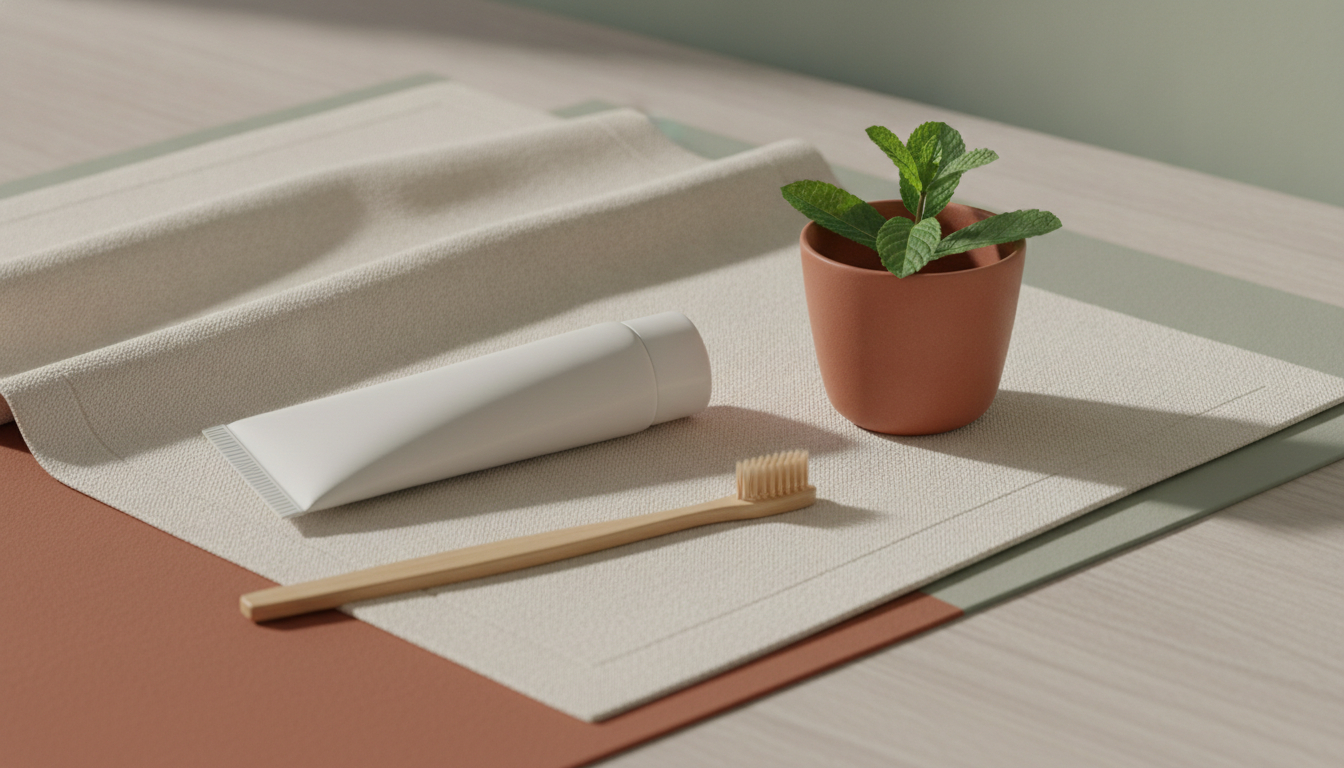
Best fluoride-free toothpaste
We tested 8 fluoride-free toothpastes. Honest take: fluoride still wins on cavities, so we favored hydroxyapatite picks that come closest.
By The PlasticFreeLab TeamUpdated June 16, 202614 min read
Disclosure·PlasticFreeLab tests and recommends independently. We sometimes earn a commission when you buy through our links. It never affects our rankings.
How the 88/100 was earned.
Boka Ela Mint
Boka uses nano-hydroxyapatite (nHAp) at a meaningful concentration, the one fluoride-free ingredient with a real and growing body of clinical evidence for remineralization. It tastes clean, is widely stocked, and is the fluoride-free option we'd most trust to actually protect enamel. We'll say it plainly: it is still not as proven as fluoride for cavity prevention, and that trade-off is the whole reason this category exists.

Everything we'd buy, in order.
- 01Best overall90
Boka Ela Mint
Boka's nano-hydroxyapatite formula is the strongest fluoride-free pick for people who still want genuine cavity protection. nHAp is a synthetic version of the mineral your enamel is mostly made of, and several controlled trials (including work originating from Japanese research dating to the 1980s) show it can remineralize early lesions and reduce sensitivity. The evidence base is real and growing, though smaller and less settled than the decades of fluoride data. Pleasant mint, no SLS, no harsh abrasives. If you are set on going fluoride-free, start here.
SponsoredCheck Amazon - 02Best hydroxyapatite89
RiseWell Mineral Toothpaste
RiseWell is the other serious hydroxyapatite contender and was co-developed with a dentist. The formula leans on hydroxyapatite for remineralization and skips fluoride, SLS, and parabens. It is slightly more abrasive-feeling than Boka and costs a touch more, but the cavity-protection logic is the same: you are betting on nHAp instead of fluoride. A reasonable bet for low-risk mouths, a conversation to have with your dentist if you get frequent cavities.
SponsoredCheck Amazon - 03Best whitening85
Wellnesse Whitening Toothpaste
Wellnesse also uses hydroxyapatite and adds whitening support without peroxide or charcoal abrasion. Whitening here is gentle and gradual: it works by remineralizing and polishing rather than stripping, so expect subtle brightening over weeks, not days. Clean ingredient list, mild mint. We rank it just behind Boka and RiseWell because the hydroxyapatite concentration is less clearly disclosed, but it is a solid daily paste for anyone who wants a whitening angle without the enamel risk of abrasives.
SponsoredCheck Amazon - 04Best classic natural82
Davids Premium Natural
Davids is a well-made, US-produced natural paste with a recyclable metal tube and a fresh peppermint that fans are loyal to. It does not contain hydroxyapatite, so it relies on good mechanical cleaning rather than active remineralization. Think of it as a clean, pleasant fluoride-free paste for low cavity risk, not a cavity-fighting formula. If your main goal is avoiding SLS and artificial sweeteners, it delivers.
SponsoredCheck Amazon - 05Best for sensitive whitening80
Lumineux Whitening Toothpaste
Lumineux skips fluoride and harsh peroxide, using essential oils and dead sea salt with a focus on the oral microbiome. It is genuinely gentle and a fair pick for sensitive mouths that react to stronger pastes. It is not a remineralizing formula, so we would not lean on it for cavity protection. Best as a low-irritation daily option for people at low risk who whiten cautiously.
SponsoredCheck Amazon - 06Best simple ingredients78
Dr. Bronner's All-One Toothpaste
About as short an ingredient list as this category gets: no fluoride, no SLS, no synthetic foaming agents, fair-trade and organic sourcing. It cleans well and the peppermint is bracing. There is no hydroxyapatite and no active cavity-fighting mechanism, so this is a values-and-simplicity pick rather than a protection pick. Good for low-risk adults who want minimal ingredients.
SponsoredCheck Amazon - 07Best budget76
Hello Antiplaque and Whitening (Fluoride-Free)
Hello's fluoride-free line is the easiest to find at a drugstore price, with no SLS, no artificial sweeteners, and a friendly mint. It is a perfectly fine everyday paste, but it is a basic cleaning formula without hydroxyapatite, so it offers no real remineralization advantage. We recommend it mainly on cost and availability for low-risk users, not on cavity protection.
SponsoredCheck Amazon
Named, not hinted at.
Charcoal Whitening Toothpastes (category)
We'd skip48We'd skip the charcoal-whitening category, including several popular fluoride-free charcoal pastes. A 2017 review in the Journal of the American Dental Association found insufficient evidence that charcoal toothpastes are safe or effective, and flagged the abrasion risk: charcoal can wear down enamel over time, which is the opposite of what a fluoride-free shopper usually wants. If you want whitening without fluoride, choose a hydroxyapatite paste instead.
How this comparison was made
- What we picked for
- Disclosed materials, third-party certification, durability in real cooking, independent contamination testing where available.
- How we evaluated
- Manufacturer disclosures, regulatory filings, peer-reviewed papers, and hands-on wear-testing. We read the labels and the filings, not the press releases.
- Who disagrees with us
- We steel-man the opposing view in every comparison, and name the brand we almost picked and the reason we didn't.
- What would change our mind
- New independent lab testing, reformulation by a ranked brand, or a peer-reviewed finding that contradicts our current reasoning.
What people ask us most.
- Is fluoride-free toothpaste a good idea?
- It is a personal choice with a real trade-off. Fluoride is the most evidence-backed, ADA-recommended ingredient for preventing cavities, and the research behind it spans decades. Going fluoride-free means giving up that proven protection. If you still prefer to skip fluoride, the strongest alternative is nano-hydroxyapatite (nHAp), which has growing clinical evidence for remineralization, though less established than fluoride. If you are at high risk for cavities, talk to your dentist before switching.
- Is fluoride in toothpaste dangerous?
- At the levels found in toothpaste, no. The FDA and ADA consider fluoride toothpaste safe and effective when used as directed, and the main caution is simply not swallowing large amounts, which is why young children use a small smear and are supervised. Most concern about fluoride relates to very high doses or very high levels in some water supplies, not the amount in a pea-sized bit of toothpaste. Choosing fluoride-free is a preference, not a safety necessity.
- Does hydroxyapatite toothpaste actually work?
- The evidence is encouraging and growing. Nano-hydroxyapatite is a synthetic form of the mineral that makes up most of your tooth enamel, and several randomized trials show it can remineralize early lesions and reduce sensitivity, in some studies performing comparably to fluoride. It is worth being honest that the body of research is smaller and newer than fluoride's, and that fluoride remains the reference standard. nHAp is the best-supported fluoride-free option we found.
- Who should not go fluoride-free?
- Anyone at elevated cavity risk should be cautious and speak with a dentist first. That includes people with a history of frequent cavities, dry mouth, frequent snacking on sugars or acids, orthodontic appliances, gum recession, or certain medical conditions. For these mouths, the proven protection of fluoride may matter more than the preference to avoid it. A dentist can assess your individual risk rather than relying on a general rule.
- Is charcoal toothpaste safe for whitening?
- We do not recommend it. A 2017 review in the Journal of the American Dental Association concluded there was insufficient evidence that charcoal and charcoal-based toothpastes are safe or effective, and raised concerns about abrasiveness that can wear away enamel. For fluoride-free whitening, a gentle hydroxyapatite paste is a safer route than abrasive charcoal.
New independent lab testing that contradicts our current ranking. A reformulation by a top pick that quietly drops a disclosed certification. A peer-reviewed paper that changes the safety picture on one of the materials above. We'll update this page within a week and mark what changed.
Sources we cited on this page.
- 01American Dental Association, Fluoride: Topical and Systemic Supplements
- 02NIDCR (NIH), Tooth Decay
- 03Amaechi et al. 2019, Hydroxyapatite vs fluoride remineralization randomized trial, PubMed
- 04O'Hagan-Wong et al. 2022, Hydroxyapatite toothpaste to prevent caries, systematic review, PubMed
- 05Brooks et al. 2017, Charcoal dentifrices literature review, JADA, PubMed
The PlasticFreeLab Team
A small group of researchers and writers cutting through the noise around non-toxic living. We read the studies, read the labels, test the products. We update our recommendations as the science evolves. We do not accept payment for product placement, we disclose every affiliate relationship, and we name the brands we reject.
Related in this hub.
- The Comparison14 min
Best Non-Toxic & Sulfate-Free Shampoos of 2026
Personal Care · We ranked 8 sulfate-free, non-toxic shampoos on ingredient safety, lather, and hair-type fit, with EWG and FDA sources and one pick we'd skip.
- The Comparison14 min
Best Natural & Aluminum-Free Deodorants of 2026
Personal Care · We tested eight aluminum-free deodorants for odor control, skin tolerance, and honest ingredient labels. Here are our picks and the ones to skip.
- The Guide10 min
What Are Phthalates? Where They Hide and How to Cut Exposure
Microplastics · A calm, cited guide to what phthalates are, where they hide in everyday products, why they matter, and simple ways to lower your exposure.
- The Comparison11 min
Best Non-Toxic Pacifiers of 2026, Tested and Ranked
Personal Care · We ranked pacifiers on material, construction, freedom from PVC and phthalates, and safety, from natural rubber to medical-grade silicone, with a clear top pick and one we would skip.
Get the Kitchen Swap Audit.
A printable checklist of 50+ kitchen items, each ranked swap now / swap eventually / don't bother. Free. Delivered instantly.
By subscribing, you agree to our Privacy Policy. One calm email a week. Unsubscribe anytime.
50+ items