
Best non-toxic coffee makers
We ranked 8 non-toxic and plastic-free coffee makers on where hot water touches plastic, carafe material, and heating element, with FDA and peer-reviewed sources and one all-plastic drip machine we'd skip.
By The PlasticFreeLab TeamUpdated July 10, 202613 min read
Disclosure·PlasticFreeLab tests and recommends independently. We sometimes earn a commission when you buy through our links. It never affects our rankings.
How the 85/100 was earned.
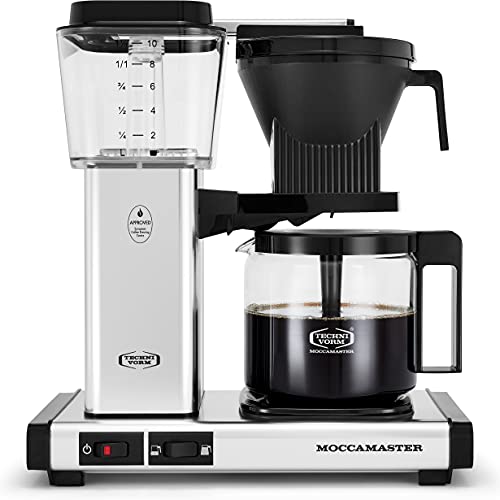
Technivorm Moccamaster KBGV Select
The non-toxic question for a coffee maker is narrower than for cookware, and it is a good one: in a standard drip machine, near-boiling water sits in a plastic reservoir, runs through plastic tubing, and pours through a plastic brew basket, so the water that becomes your coffee has touched hot plastic at every step. The Moccamaster is our pick because its water path is built around a copper heating element and a metal spout into a glass carafe, which keeps the hot-water contact overwhelmingly on metal and glass rather than plastic. It is not literally plastic-free, no electric brewer is, but it minimizes hot-plastic contact more than almost any machine at its level while brewing at the correct temperature. It is expensive and has no programmable timer, which are fair trade-offs for a repairable, decades-long machine with a clean water path.
Everything we'd buy, in order.
- 01Best overall electric87
Technivorm Moccamaster KBGV Select
The Moccamaster is the electric drip machine that takes the hot-water-and-plastic problem most seriously without asking you to brew by hand. Its copper heating element and metal outlet arm carry near-boiling water into a glass carafe, so the water that becomes coffee spends its hot phase against metal and glass rather than the plastic reservoir and tubing most drip makers use. It also brews in the accepted ideal range, which is why it is a specialty-coffee staple, and it is hand-built, repairable, and sold with replacement parts for a genuinely long life. The honest caveats: it is not plastic-free, since the housing and brew basket include plastic, it is costly, and the classic KBGV has no timer or auto-brew. For minimal hot-plastic contact in a real electric brewer, it is the strongest pick.
SponsoredCheck Amazon - 02Best fully plastic-free89
Chemex Classic Pour-Over
The Chemex is the cleanest answer to the material question because it is a single piece of borosilicate glass with a wood collar and no plastic anywhere in the brew path, so hot water only ever touches glass and a paper filter. That makes it the pick for anyone who wants to remove the hot-plastic variable entirely rather than minimize it, and it happens to make excellent, clean-tasting coffee that has kept it popular for decades. It is also inexpensive, easy to clean, and effectively unbreakable in normal use apart from the obvious risk of dropping glass. The trade-offs are that it is fully manual, so you heat water separately and pour it yourself, it makes a single batch at a time, and the thick Chemex filters are a small ongoing cost. If plastic-free is the whole goal, it is the honest winner.
SponsoredCheck Amazon - 03Best premium electric85
Ratio Eight
The Ratio Eight is built to make automatic drip feel like a careful pour-over, and its appeal on a non-toxic list is that it leans hard on glass, stainless steel, and wood in the parts you see and, more to the point, routes hot water through a borosilicate-glass and stainless path into a glass carafe. It brews at the right temperature with a pre-infusion bloom, and it is a genuinely beautiful, well-made machine. The honest framing is that, like any electric brewer, it is not entirely plastic-free, and it is expensive enough that it is a considered purchase rather than a default. For someone who wants automatic convenience, specialty-grade brewing, and a water path built around glass and metal, and who will pay for it, it is the premium standout.
SponsoredCheck Amazon - 04Best budget plastic-free83
Bodum Pour Over with Glass Carafe
Bodum's pour-over is the inexpensive way to get a plastic-free brew path: a borosilicate-glass carafe with a permanent stainless-steel mesh filter, so hot water touches only glass and steel and there are no paper filters to buy. It is the pick for someone who wants the plastic-free simplicity of a Chemex with a reusable filter and a lower price. Practically, the metal filter lets more oils and fine sediment through than paper, which gives a fuller, heavier cup that some people prefer and others do not, and like all glass it needs gentle handling. It is manual, so you boil water separately and pour. For a cheap, reusable, genuinely plastic-free setup, it is hard to beat on value.
SponsoredCheck Amazon - 05Best French press82
Frieling Stainless Steel French Press
A double-walled stainless-steel French press is a strong non-toxic option because the entire brewing vessel is 18/10 stainless with no plastic in contact with the coffee and no glass to shatter, which makes it the most durable pick here and a good one for travel or a busy kitchen. Stainless is inert and keeps the coffee hot far longer than a glass press. As a brewing method, a French press produces a rich, full-bodied cup, though its metal mesh passes more sediment and oils than a drip or pour-over, so it is a matter of taste. The honest points are that it is fully manual and that a French press is harder to clean than a pour-over. For an unbreakable, plastic-free, insulated brewer, it is excellent.
SponsoredCheck Amazon - 06Programmable, with a plastic caveat71
OXO Brew 8-Cup
The OXO Brew is a well-regarded programmable drip machine that brews at a good temperature and is easy to live with, and it is here to be honest about a compromise rather than to pretend it is plastic-free. Like most automatic drip makers, it uses a plastic water reservoir and brew basket, so hot water does contact plastic on its way to the glass carafe, which is precisely the pathway a non-toxic shopper is weighing. OXO is a reputable brand whose materials meet food-contact standards, so this is not an alarm, it is a trade-off: you gain a timer, auto-brew, and everyday convenience, and you accept more hot-plastic contact than the Moccamaster or a manual method. If programmable convenience matters most and you are comfortable with that trade, it is a sensible choice, ranked here with the caveat stated plainly.
SponsoredCheck Amazon - 07Best value drip, same caveat69
Bonavita Connoisseur One-Touch
The Bonavita is a specialty-approved drip machine that hits the right brew temperature at a lower price than the Moccamaster, and it earns a spot as the value automatic option. The same honesty applies as with any conventional drip maker: it uses a plastic reservoir and basket, so the hot water contacts plastic before reaching the glass carafe, which is the exact concern this guide exists to weigh. It is simpler and less expensive than the premium electric picks and brews a very good cup. The realistic framing is that you are choosing good brewing and a fair price over the minimal-plastic water path of the Moccamaster or the plastic-free simplicity of a manual method. For a budget-conscious buyer who still wants proper temperature and accepts the plastic contact, it is a solid pick.
SponsoredCheck Amazon
Named, not hinted at.
Generic all-plastic drip coffee maker
We'd skip45This stands in for the inexpensive drip machines that are plastic almost everywhere the water goes: a plastic reservoir, plastic tubing, a plastic brew basket, and often a plastic carafe or thermal liner too. It is the worst case for the specific concern this guide is about, since near-boiling water is in sustained contact with warm plastic through the entire brew, and cheap machines rarely disclose what their plastics are. Studies on plastic and hot water, including work on microplastic release from plastic containers exposed to heat, are why minimizing hot-plastic contact is a reasonable instinct even where individual exposures are small. Since glass-carafe, metal-path, and fully manual options exist at every price, we would skip the all-plastic machine, especially one that will not say what its materials are.
How this comparison was made
- What we picked for
- Disclosed materials, third-party certification, durability in real cooking, independent contamination testing where available.
- How we evaluated
- Manufacturer disclosures, regulatory filings, peer-reviewed papers, and hands-on wear-testing. We read the labels and the filings, not the press releases.
- Who disagrees with us
- We steel-man the opposing view in every comparison, and name the brand we almost picked and the reason we didn't.
- What would change our mind
- New independent lab testing, reformulation by a ranked brand, or a peer-reviewed finding that contradicts our current reasoning.
What people ask us most.
- What actually makes a coffee maker non-toxic?
- The useful question is narrow: where does hot water touch plastic on its way to becoming your coffee? In a typical automatic drip machine, water sits in a plastic reservoir, is heated and carried through plastic tubing, and drips through a plastic brew basket, so it contacts warm plastic at several points before it reaches the carafe. A non-toxic or plastic-free coffee maker reduces or removes that contact: a fully manual glass pour-over like a Chemex has no plastic in the brew path at all, a stainless French press brews entirely in metal, and a well-designed electric machine like the Moccamaster routes hot water through a metal element and spout into a glass carafe so the plastic it does contain is mostly kept away from the hot-water path. The secondary considerations are a glass or stainless carafe rather than a plastic one, and reputable materials that meet food-contact standards.
- Is it bad to run hot water through plastic in a coffee maker?
- It is the reasonable thing to want to minimize, while keeping the scale in perspective. Heat increases the rate at which substances can migrate from plastic into water, which is why hot-water contact draws more attention than cold, and research on plastic containers exposed to heat, including a widely cited study on microplastic release from plastic infant-feeding bottles, has shown that warm plastic can shed microplastic particles and, depending on the plastic, small amounts of chemical additives. Food-contact plastics used by reputable brands are regulated and the per-cup amounts are small, so this is not a cause for alarm, it is a sensible thing to reduce where it is easy to do. Because coffee makers with glass and metal water paths exist at every price, choosing one is a low-cost way to cut hot-plastic contact without giving anything up.
- Do I need a plastic-free coffee maker or just a glass carafe?
- A glass carafe is the easy, visible half of the problem, and it is worth having, since a glass or stainless carafe avoids storing hot coffee against plastic. But the carafe is the last step; the more meaningful contact happens earlier, when near-boiling water sits in the reservoir and runs through the heating path and brew basket. So a machine with a glass carafe but an all-plastic water path still exposes the water to hot plastic before it ever reaches the glass. If you want the full benefit, look at the whole water path: a manual glass pour-over or a stainless French press removes plastic from brewing entirely, while among electric machines, the ones that route hot water through metal and glass do more than a glass carafe alone. In short, a glass carafe helps, but it is not the same as a plastic-free brew path.
- Are manual pour-over and French press really lower in plastic?
- Yes, and that is their main advantage on this specific question. A glass pour-over such as a Chemex is a single piece of borosilicate glass, so hot water touches only glass and a paper filter, and a double-walled stainless French press brews entirely in inert metal, so neither method puts hot water against plastic at any stage. That is a genuine reduction compared with almost any automatic drip machine. The trade-off is convenience: both are manual, meaning you heat water separately, pour it yourself, and brew one batch at a time, with no timer or wake-up-to-coffee automation. They are also inexpensive and long-lasting. If the plastic question is your priority and you do not mind a two-minute hands-on routine, manual brewing is the most complete answer; if you need programmable convenience, a minimal-plastic electric machine is the compromise.
- Is BPA the main concern with plastic coffee makers?
- BPA is one concern, but it is not the whole story, and focusing only on the BPA-free label can be misleading. BPA, or bisphenol A, is a compound used in some hard plastics and resins that regulators have studied closely, and many coffee makers are now labelled BPA-free in response. The catch is that BPA-free does not mean plastic-free or additive-free: manufacturers often substitute related bisphenols or other plasticizers whose profiles are less well characterized, and the physical shedding of microplastic particles from hot plastic happens regardless of whether the plastic contains BPA. So a BPA-free plastic reservoir is an improvement over an old BPA-containing one, but it still involves hot water contacting plastic. The more complete approach, if the material question matters to you, is to reduce hot-plastic contact overall by favoring glass and metal water paths, rather than to treat a single label as the finish line.
New independent lab testing that contradicts our current ranking. A reformulation by a top pick that quietly drops a disclosed certification. A peer-reviewed paper that changes the safety picture on one of the materials above. We'll update this page within a week and mark what changed.
Sources we cited on this page.
The PlasticFreeLab Team
A small group of researchers and writers cutting through the noise around non-toxic living. We read the studies, read the labels, test the products. We update our recommendations as the science evolves. We do not accept payment for product placement, we disclose every affiliate relationship, and we name the brands we reject.
Related in this hub.
- The Explainer8 min
Do Plastic Cutting Boards Shed Microplastics? The Study Explained
Kitchen · A 2024 study found that chopping on plastic boards can release microplastics into food. Here are the numbers, their limits, and the simple, sensible takeaway.
- The Explainer7 min
Is Caraway Cookware Non-Toxic? An Honest Verdict
Kitchen · Caraway uses a ceramic non-stick coating free of PFAS, PFOA, lead, and cadmium. Here is what that means, where the limits are, and who it is worth it for.
- The Explainer7 min
Is Our Place Cookware Non-Toxic? An Honest Verdict
Kitchen · The Our Place Always Pan uses a ceramic non-stick coating free of PFAS, PFOA, lead, and cadmium. Here is what that means and where the limits are.
- The Comparison13 min
Best Non-Toxic Rice Cookers of 2026, Tested and Ranked
Kitchen · We ranked 7 rice cookers on the one thing that decides non-toxic, the inner pot, favoring bare 18/8 stainless steel and unglazed clay over PTFE nonstick, with FDA, EPA, and NSF sources and one coated cooker we'd skip.
Get the Kitchen Swap Audit.
A printable checklist of 50+ kitchen items, each ranked swap now / swap eventually / don't bother. Free. Delivered instantly.
By subscribing, you agree to our Privacy Policy. One calm email a week. Unsubscribe anytime.
50+ items