
Best non-toxic dinnerware
We ranked 8 non-toxic dinnerware sets on glaze safety, lead and cadmium testing, material, and durability, with FDA and California sources and one melamine 'eco' set we'd skip.
By The PlasticFreeLab TeamUpdated July 14, 202613 min read
Disclosure·PlasticFreeLab tests and recommends independently. We sometimes earn a commission when you buy through our links. It never affects our rankings.
How the 87/100 was earned.
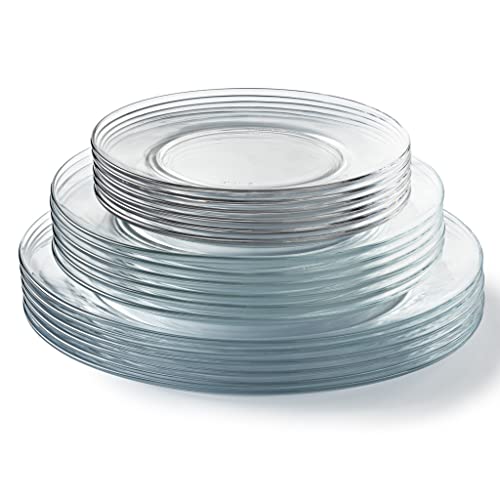
Duralex Lys Tempered Glass Dinnerware
The non-toxic question for dinnerware comes down to one thing, what is on the surface your food touches, because the classic concern is lead or cadmium leaching out of a fired ceramic glaze, especially bright, dark, or decorative ones and older or imported pieces. Duralex sidesteps the glaze debate entirely by being clear tempered soda-lime glass with no glaze and no coating at all, so there is nothing fired onto the surface to leach in the first place. It is also genuinely tough, rated for oven, microwave, freezer, and dishwasher, and made in France to a long-standing standard. The honest trade-offs are that clear glass shows every chip and is heavier than melamine, and a hard enough drop onto tile can still break it. For anyone who wants the material question answered rather than managed, it is the cleanest starting point.
Everything we'd buy, in order.
- 01Best overall90
Duralex Lys Tempered Glass Dinnerware
Duralex takes the glaze question off the table by having no glaze at all. Each piece is a single body of clear tempered soda-lime glass, so the surface your food sits on is inert glass rather than a fired colored coating that could contain lead or cadmium, which is the specific worry with ceramic plates. The tempering makes it far more break-resistant than ordinary glass and rated for oven, microwave, freezer, and dishwasher, and it has been made in France the same way for decades. Being clear glass, it shows chips and scratches more visibly than opaque ware and it is heavier than plastic or melamine, and a hard fall onto a stone floor can still shatter it. For a plainly inert, coating-free everyday plate, it is the most straightforward pick here.
SponsoredCheck Amazon - 02Best tested ceramic89
East Fork The Dinner Set
East Fork earns the top ceramic spot on transparency as much as material. Its stoneware is made in North Carolina and the company publishes third-party laboratory results showing lead and cadmium in its glazes below the detection limit, which is exactly the evidence most dinnerware brands never provide. The clay body is dense and durable, the muted glaze colors are formulated without the heavy metals that historically brightened ceramics, and the plates are dishwasher and microwave safe. The honest points are the price, which is high for stoneware, and the weight that comes with a substantial handmade-style piece. For someone who wants glazed ceramic they can actually verify rather than trust, it is the pick with receipts.
SponsoredCheck Amazon - 03Best lightweight85
Corelle Vitrelle (plain white)
Corelle's Vitrelle is a laminated three-layer tempered glass rather than ceramic, which makes it remarkably light and thin while resisting chips and breaks, and current-production plain-white Vitrelle carries no decorative glaze on the eating surface, so the lead-and-cadmium concern that attaches to painted patterns does not apply to it. It is dishwasher and microwave safe and stacks into very little space. Two honest caveats matter: decorated and vintage Corelle, especially bright patterns made before the mid-2000s, has been found to contain lead in the surface decoration, so the safe move is current, plain, undecorated pieces; and while Vitrelle rarely breaks, when it does it can shatter dramatically. For a light, cheap, plain-surface everyday set, it is excellent value.
SponsoredCheck Amazon - 04Best made-in-USA ceramic84
Fiesta Dinnerware (current line)
Fiesta is the answer for people who want color without the vintage-glaze worry. The current dinnerware is made in West Virginia and the maker states its glazes have been lead-free since 1986 and are routinely tested, so the bright colors that make ceramics fun come without the heavy metals that made older brightly glazed ware a concern. The pieces are dense, durable, and dishwasher and microwave safe. The important distinction is between new Fiesta and collectible vintage Fiesta: some mid-century pieces used uranium and lead glazes and are genuinely not for food use, so this pick is specifically the current line. For durable, American-made, tested colored dinnerware, it is the standout.
SponsoredCheck Amazon - 05Best glass value83
Bormioli Rocco Tempered Glass Set
Bormioli Rocco's tempered glass dinnerware is the value route to a glaze-free table. Like Duralex it is clear tempered soda-lime glass with no coating, so food contacts only inert glass, and the Italian-made pieces are oven, microwave, freezer, and dishwasher safe. It typically costs less than the French benchmark and is widely stocked, which makes it an easy first plain-glass set. The trade-offs are the ones common to all clear glass: visible scratching over time, more weight than plastic, and the risk of shattering on a hard drop. For a low-cost, coating-free glass set that behaves like the pricier option, it is a sensible pick.
SponsoredCheck Amazon - 06Best modern stoneware82
Our Place Dinner Set
Our Place's dinner set is the design-led stoneware option, a matte-glazed ceramic in soft colors that the brand states is tested to California Proposition 65 limits for lead and cadmium, which is a meaningful bar even if it is less exhaustive than a full published lab report. The stoneware is sturdy, dishwasher and microwave safe, and the muted palette avoids the heavily pigmented bright glazes that carry the most historical concern. The honest framing is that it is a lifestyle brand at a lifestyle price, and its testing claims, while credible, are less transparent than a company that posts the numbers. For an attractive modern stoneware set from a brand willing to name a standard, it is a likable pick.
SponsoredCheck Amazon - 07Cool food only, with a caveat60
Bamboo or wheat-straw 'eco' dinnerware
This stands for the 'eco' dinnerware sold as bamboo, wheat straw, or rice husk, which sounds plastic-free but usually is not. To hold a plate shape, these plant fibers are almost always bound with a melamine-formaldehyde resin, and the concern with melamine tableware is well documented: it can release small amounts of melamine and formaldehyde into food, and that migration rises sharply with heat, which is why melamine ware is not microwave safe and is not recommended for hot or acidic food. As unbreakable outdoor or kids' plates for cool food it has a place, and we rank it honestly rather than dismiss it, but the natural-fiber marketing oversells how plastic-free it is. If you want it, use it only for cold food and never in the microwave.
SponsoredCheck Amazon
Named, not hinted at.
Generic imported decoratively glazed set
We'd skip44This is the inexpensive imported dinnerware, brightly glazed or decoratively painted ceramic sold with no country of origin you trust and no lead-and-cadmium testing named anywhere. The tells are consistent: intense colors or metallic and hand-painted decoration, especially on the food surface or rim, which are the glazes most associated with lead; vintage or antique pieces of unknown make; and any set that will not say it meets FDA or Proposition 65 limits. Decorative and imported ceramics are precisely the category regulators flag for leachable lead, and acidic food and daily use are what draw it out. We would skip any plate that will not name its testing, because the brands using genuinely lead-free glazes or plain glass say so plainly, and the ones staying vague usually have a reason.
How this comparison was made
- What we picked for
- Disclosed materials, third-party certification, durability in real cooking, independent contamination testing where available.
- How we evaluated
- Manufacturer disclosures, regulatory filings, peer-reviewed papers, and hands-on wear-testing. We read the labels and the filings, not the press releases.
- Who disagrees with us
- We steel-man the opposing view in every comparison, and name the brand we almost picked and the reason we didn't.
- What would change our mind
- New independent lab testing, reformulation by a ranked brand, or a peer-reviewed finding that contradicts our current reasoning.
What people ask us most.
- What actually makes dinnerware non-toxic?
- It comes down to the surface your food touches. With ceramic and stoneware, that surface is a fired glaze, and the historical concern is that some glazes, especially bright, dark, red, orange, or hand-painted ones and those on vintage or imported pieces, contained lead or cadmium that can leach into food, most readily with acidic dishes and daily use. Non-toxic dinnerware answers this in one of two ways: no glaze at all, meaning clear tempered glass, which is inert and has nothing fired onto it to leach, or a modern ceramic whose maker states and ideally publishes testing showing lead and cadmium below the relevant limits. The other thing to weigh is melamine and melamine-bonded 'bamboo' or wheat-straw ware, which is fine for cool food but can release melamine and formaldehyde when heated, so it is not for hot food or the microwave.
- How do I know if my plates contain lead?
- You cannot tell by looking, but a few signals raise the odds enough to be cautious. The higher-risk pieces are brightly or richly colored glazes, decoration painted on top of the glaze rather than under it, metallic or hand-painted rims, and anything vintage, antique, handmade by an unknown potter, or imported without testing information. If a plate's decoration is worn, chalky, or leaves a mark, stop using it for food. For a genuine answer at home, a swab-style lead test kit designed for dishware gives a quick indication, though it is less reliable than a laboratory test. The simplest path forward is to eat off plain tempered glass or a ceramic brand that states its glazes meet FDA and California Proposition 65 limits, and to retire decorative or uncertain pieces to display rather than the dinner table.
- Is glass or ceramic dinnerware safer?
- Neither is unsafe when chosen well, but they answer the question differently. Clear tempered glass, such as Duralex or Bormioli Rocco, has no glaze at all, so there is simply nothing fired onto the surface that could leach, which makes it the most certain option and a good default. Well-made modern ceramic and stoneware are also fine, but their safety depends on the glaze being formulated and tested to limit lead and cadmium, which is why transparency matters and why a brand that publishes lab results is preferable to one that just says 'lead-free.' In practice glass wins on certainty and price and loses on weight and the way it shows chips, while good ceramic wins on looks, warmth, and heat retention. A sensible table often mixes both: plain glass for everyday and acidic food, and a tested ceramic set for when you want color or a nicer look.
- Is melamine or bamboo dinnerware safe to eat off?
- For cool food, melamine dinnerware is generally considered fine by food regulators, and it is genuinely useful as unbreakable ware for children and outdoor meals. The limit is heat. Melamine, the plastic resin these plates are made from and the same binder used in most 'bamboo' and wheat-straw dinnerware, can migrate small amounts of melamine and formaldehyde into food, and that migration increases markedly with temperature and with acidic or fatty foods, which is why melamine and bamboo-melamine ware should not go in the microwave and is not recommended for hot food. The 'bamboo' framing is the misleading part: the natural fiber is bound in melamine resin, so it is not the plastic-free product the label suggests. Keep it for cold food and use glass or ceramic for anything hot.
- Is vintage or hand-painted dinnerware safe to use?
- Treat it with caution and, when in doubt, keep it for display. Lead glazes were common in older ceramics, and some collectible mid-century lines used lead and even uranium glazes that are genuinely not meant for food, so age is a real risk factor rather than a charming quirk. Hand-painted and decoratively glazed pieces, especially with decoration on the food surface or rim and from makers or countries without testing standards, are the other higher-risk group regulators flag. If a vintage plate's surface is worn, dull, or chalky, stop eating off it, and never store or serve acidic food such as citrus, tomato, or wine in uncertain glazed or crystal pieces. The safe way to enjoy heirloom and hand-painted ware is on the shelf, with plain glass or tested modern ceramic doing the daily eating.
New independent lab testing that contradicts our current ranking. A reformulation by a top pick that quietly drops a disclosed certification. A peer-reviewed paper that changes the safety picture on one of the materials above. We'll update this page within a week and mark what changed.
Sources we cited on this page.
The PlasticFreeLab Team
A small group of researchers and writers cutting through the noise around non-toxic living. We read the studies, read the labels, test the products. We update our recommendations as the science evolves. We do not accept payment for product placement, we disclose every affiliate relationship, and we name the brands we reject.
Related in this hub.
- The Explainer8 min
Do Plastic Cutting Boards Shed Microplastics? The Study Explained
Kitchen · A 2024 study found that chopping on plastic boards can release microplastics into food. Here are the numbers, their limits, and the simple, sensible takeaway.
- The Explainer7 min
Is Caraway Cookware Non-Toxic? An Honest Verdict
Kitchen · Caraway uses a ceramic non-stick coating free of PFAS, PFOA, lead, and cadmium. Here is what that means, where the limits are, and who it is worth it for.
- The Explainer7 min
Is Our Place Cookware Non-Toxic? An Honest Verdict
Kitchen · The Our Place Always Pan uses a ceramic non-stick coating free of PFAS, PFOA, lead, and cadmium. Here is what that means and where the limits are.
- The Comparison13 min
Best Non-Toxic Rice Cookers of 2026, Tested and Ranked
Kitchen · We ranked 7 rice cookers on the one thing that decides non-toxic, the inner pot, favoring bare 18/8 stainless steel and unglazed clay over PTFE nonstick, with FDA, EPA, and NSF sources and one coated cooker we'd skip.
Get the Kitchen Swap Audit.
A printable checklist of 50+ kitchen items, each ranked swap now / swap eventually / don't bother. Free. Delivered instantly.
By subscribing, you agree to our Privacy Policy. One calm email a week. Unsubscribe anytime.
50+ items