
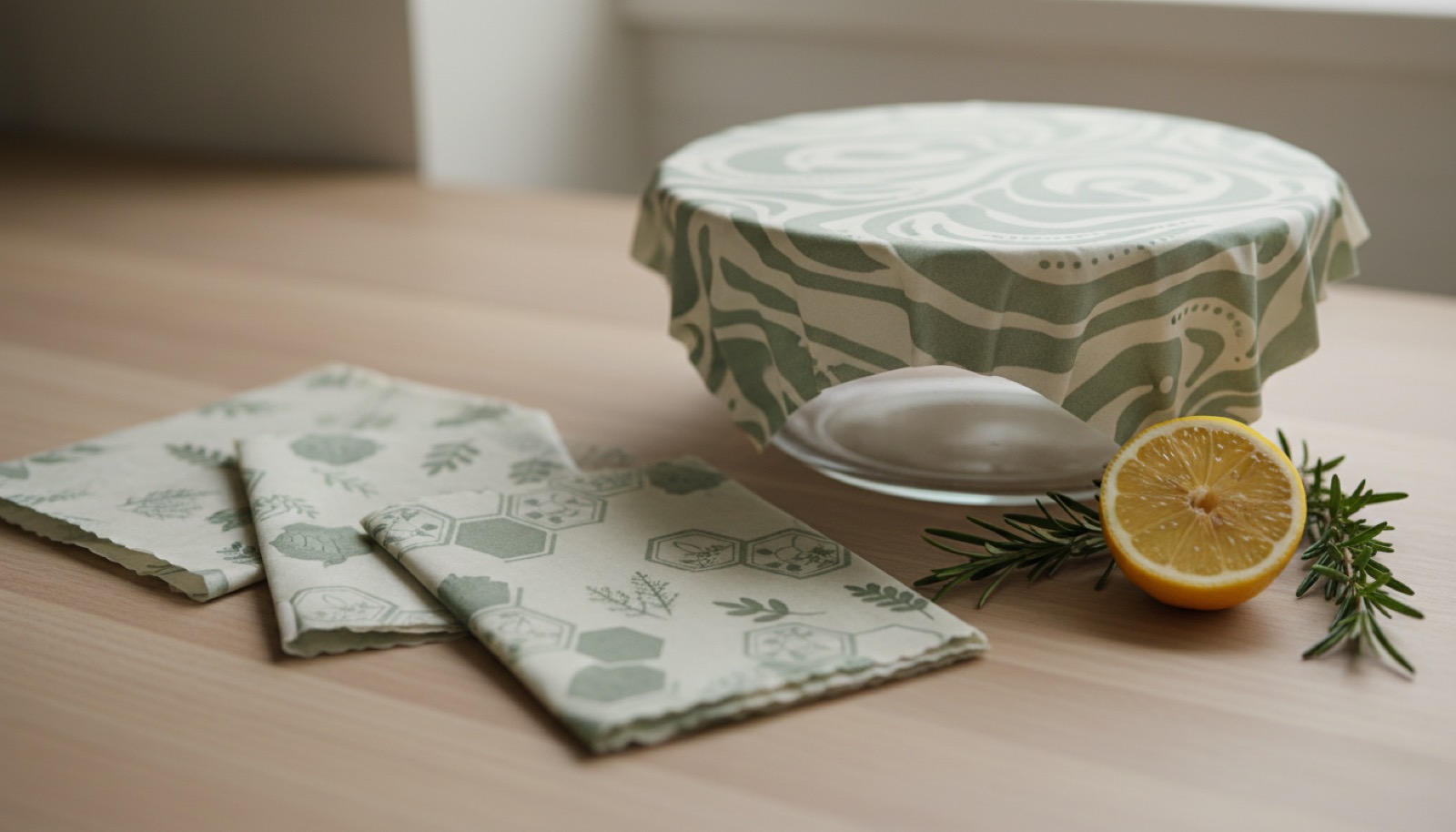
Best beeswax wraps
We ranked 8 reusable beeswax and plant-wax food wraps on materials, seal, durability, and value, with FDA and organic-certification sources and one to skip.
By The PlasticFreeLab TeamUpdated July 6, 202613 min read
Disclosure·PlasticFreeLab tests and recommends independently. We sometimes earn a commission when you buy through our links. It never affects our rankings.
How the 87/100 was earned.
Bee's Wrap Assorted Set
Bee's Wrap is the pick that gets the whole recipe right at once: GOTS-certified organic cotton coated with responsibly sourced beeswax, organic jojoba oil, and tree resin, with the full ingredient list printed plainly rather than hidden behind a proprietary blend. It molds to a bowl or a half-lemon with the warmth of your hands, holds its seal for a year of normal use, and is compostable at end of life. For most people replacing plastic wrap, it is the most transparent, most verifiable starting point.

Everything we'd buy, in order.
- 01Best overall89
Bee's Wrap Assorted Set
Bee's Wrap built the category, and its recipe is still the one to beat: GOTS-certified organic cotton coated with beeswax, organic jojoba oil, and tree resin, all named on the label rather than buried in a 'proprietary blend'. The wraps warm and mold to a bowl rim or over a cut avocado with a firm cling, and with hand-washing in cool water they hold that tack for about a year before you can re-wax or compost them. They will not seal a liquid or handle raw meat, which is true of every beeswax wrap, but for covering bowls, wrapping cheese, bread, and produce, this is the most transparent and reliable set.
SponsoredCheck Amazon - 02Best seal87
Etee Organic Beeswax Wraps
Etee's wraps add clove and cinnamon essential oils to the beeswax-and-resin coating, which the company frames as antibacterial and which also gives them a noticeably tackier grip than most, the best cling in our group for keeping a wrap put on an awkwardly shaped bowl. The cotton is organic and the ingredient list is fully disclosed. The scent is stronger than Bee's Wrap and fades over weeks, which some people love and a few find intrusive on mild foods like bread. A strong pick if seal quality is your first priority and you do not mind a faintly spiced smell.
SponsoredCheck Amazon - 03Best for produce86
Abeego Original Beeswax Wraps
Abeego is the brand that argues a food wrap should breathe rather than seal airtight, which is genuinely useful for whole produce and cheese that spoil faster when suffocated in plastic. The coating is beeswax, tree resin, and organic jojoba oil on a hemp-and-organic-cotton cloth, and the fabric is a touch sturdier than most, so the wraps feel built to last. They cling well without being the tackiest here, in keeping with the breathable philosophy. If your main use is keeping vegetables, herbs, and hard cheese fresh, Abeego's approach has real merit.
SponsoredCheck Amazon - 04Best durability85
Khala & Co Organic Wraps
Khala & Co makes some of the most hard-wearing wraps we handled, on GOTS-certified organic cotton with a beeswax, plant-oil, and resin coating, and the brand publishes its sourcing clearly. The prints are vivid and the fabric resists the early cracking that shortens a cheaper wrap's life. They mold and seal well at body temperature. The trade-off is price: this is one of the more expensive sets per wrap, which only pays off if you use them daily and get the full year-plus of life the durability promises. For heavy users, that math works.
SponsoredCheck Amazon - 05Best patterns and value84
Z Wraps Reusable Beeswax Wraps
Z Wraps hit a sensible middle: a beeswax, jojoba oil, and tree resin coating on organic cotton, sold at a per-wrap price below the premium brands, with a large range of patterns that make them a common gift pick. The cling is good rather than exceptional and the wraps are pliable and easy for a beginner to mold. Longevity is solid if hand-washed cool. They are a genuinely reasonable everyday choice for someone who wants disclosed ingredients and organic cotton without paying the top-tier price.
SponsoredCheck Amazon - 06Best large sizes82
LilyBee Wrap
LilyBee is useful for the jobs other wraps are too small for, offering large sheets and roll formats that cover a big salad bowl or wrap a whole loaf. The coating is beeswax, jojoba oil, and tree resin on cotton, and the brand states its cotton sourcing, though certification detail is a little thinner than Bee's Wrap or Khala. The larger sheets are convenient but use more material and cost more per piece, and very large wraps can be harder to get a full seal on. A good pick specifically when size is the problem you are solving.
SponsoredCheck Amazon - 07Best vegan option81
The Vegan Kind Plant-Based Wax Wraps
For anyone who avoids animal products, plant-wax wraps swap beeswax for a candelilla or soy wax blend, keeping the resin-and-oil coating and the reusable, moldable behavior. These wraps are the honest vegan answer to the fact that beeswax wraps are, by definition, not vegan. They mold and cling a little less firmly than beeswax at hand temperature, which is the main trade-off, and warm hands help. The ingredient list is disclosed. A sound choice if the vegan requirement is non-negotiable; otherwise beeswax versions seal marginally better.
SponsoredCheck Amazon
Named, not hinted at.
Generic unbranded 'eco' wax wraps
We'd skip58This stands in for the cheap multipacks sold with words like eco, natural, and reusable but no disclosed coating recipe and no named cotton source. The tells are consistent: a vague 'natural wax' with no mention of whether it is beeswax or plant wax, no organic-cotton certification, unusually loud prints hiding thin fabric, and a price that undercuts everyone by relying on unstated materials. We would skip anything that markets 'natural' without naming its wax and fabric, because a genuine wrap's recipe is simple, cheap to disclose, and the brands that make good ones always list it.
How this comparison was made
- What we picked for
- Disclosed materials, third-party certification, durability in real cooking, independent contamination testing where available.
- How we evaluated
- Manufacturer disclosures, regulatory filings, peer-reviewed papers, and hands-on wear-testing. We read the labels and the filings, not the press releases.
- Who disagrees with us
- We steel-man the opposing view in every comparison, and name the brand we almost picked and the reason we didn't.
- What would change our mind
- New independent lab testing, reformulation by a ranked brand, or a peer-reviewed finding that contradicts our current reasoning.
What people ask us most.
- Are beeswax wraps actually safe for food contact?
- Yes, for the foods they are designed for. Beeswax wraps are made from cloth (usually cotton) coated with beeswax or a plant wax, plant oil such as jojoba, and tree resin, all long-standing food-contact materials. Beeswax itself is an FDA-recognized substance generally regarded as safe for food use. The important limits are practical, not toxicological: because the wraps are not sanitized at high heat, they should not be used on raw meat, raw fish, or anything you would need to disinfect, and they are not meant for hot food. For covering bowls and wrapping bread, cheese, and produce, they are a safe, well-established plastic-wrap alternative.
- How do beeswax wraps compare to plastic cling film for exposure?
- The relevant contrast is about what leaches into food. Conventional plastic cling films can be made with plasticizers, and some older films used phthalate plasticizers that can migrate into fatty foods, which is one reason people look for alternatives. Beeswax wraps sidestep that entire question because their coating is wax, plant oil, and resin rather than a petroleum plastic with added softeners. That said, the wraps are a comfort-and-waste upgrade more than an urgent safety fix for most people; if your concern is plasticizer migration specifically, the calmer framing and the evidence are covered in our explainer on what plasticizers are.
- How long do beeswax wraps last, and how do I care for them?
- A good beeswax wrap lasts roughly a year of regular use, and sometimes longer, before the coating thins and it stops clinging. Care is simple and is what determines lifespan: wash in cool or lukewarm water with a little mild dish soap, never hot water, which melts the wax, and never the dishwasher or microwave. Air-dry, then store flat or loosely rolled. When a wrap finally loses its tack, many can be refreshed by warming them briefly in a low oven on parchment to redistribute the wax, or by ironing on new wax pellets, which extends life before composting.
- Can you put beeswax wraps in the freezer or use them for liquids?
- The freezer is fine and even useful: beeswax firms up in the cold, so wraps hold a fold well around bread or portioned foods, and they thaw back to pliable at room temperature. Liquids are the clear no. Beeswax wraps cover and cling, but they do not create a watertight seal, so a bowl of soup or a cut, juicy fruit stored face-down will leak. Use a lidded glass container for anything wet, and reserve the wraps for the many jobs where a breathable, moldable cover is all you need, which is most of what plastic wrap is used for anyway.
- Are beeswax wraps compostable at the end of their life?
- Yes, and it is one of their genuine advantages over plastic film. Because a beeswax wrap is cotton or hemp cloth coated with wax, plant oil, and natural resin, a worn-out wrap can be cut into strips and added to a home compost, where the fabric and coating break down, or used as a natural firestarter. This is only true of wraps made from natural fibers and coatings, which is another reason to buy ones that disclose their materials: a wrap with a synthetic-blend fabric or an undisclosed coating cannot be composted with the same confidence. The compostability is the tidy end to the plastic-free story.
New independent lab testing that contradicts our current ranking. A reformulation by a top pick that quietly drops a disclosed certification. A peer-reviewed paper that changes the safety picture on one of the materials above. We'll update this page within a week and mark what changed.
Sources we cited on this page.
The PlasticFreeLab Team
A small group of researchers and writers cutting through the noise around non-toxic living. We read the studies, read the labels, test the products. We update our recommendations as the science evolves. We do not accept payment for product placement, we disclose every affiliate relationship, and we name the brands we reject.
Related in this hub.
- The Guide22 min
The Complete Non-Toxic Kitchen Guide, in Priority Order
Kitchen · Everything worth swapping in your kitchen, ranked by impact. Cookware, water, storage, small appliances, utensils. The complete priority list.
- The Comparison14 min
Best Glass Food Storage Containers of 2026, Ranked
Kitchen · We ranked 8 glass food storage sets on glass type, lid safety, and seal quality, with FDA and NIH sources and one we'd skip.
- The Explainer10 min
What Are Plasticizers? Where They Hide and How to Cut Them
Microplastics · Plasticizers make rigid plastic soft and flexible. Most are phthalates, and they migrate into food, dust, and air. Here is where they hide and what the evidence supports cutting.
- The Explainer9 min
Can You Microwave Plastic? What the Science Actually Says
Microplastics · The short answer is that heating food in plastic is the one habit worth changing, because heat drives chemicals and particles out of the plastic and into the food. Here is what the research shows, which plastics are safer, and the simple swaps that make the question moot.
Get the Kitchen Swap Audit.
A printable checklist of 50+ kitchen items, each ranked swap now / swap eventually / don't bother. Free. Delivered instantly.
By subscribing, you agree to our Privacy Policy. One calm email a week. Unsubscribe anytime.
50+ items