
Can you microwave plastic? A calm look at what the evidence shows
By The PlasticFreeLab TeamUpdated July 4, 20269 min read
The short answer is that heating food in plastic is the one habit worth changing, because heat drives chemicals and particles out of the plastic and into the food. Here is what the research shows, which plastics are safer, and the simple swaps that make the question moot.
What people ask us next.
- Can you microwave plastic?
- You can microwave plastic that is explicitly labelled microwave-safe, but the more useful answer is that heating food in plastic is the habit most worth avoiding, and it is easy to avoid. Heat is the single condition that most increases the movement of chemicals and particles out of a plastic and into whatever it holds, so the microwave is the worst place to use plastic even when the container survives the heat physically. A container marked microwave-safe has been tested not to melt or warp, which is a mechanical test, not a promise that nothing migrates into the food. A 2023 study in Environmental Science and Technology (Hussain et al.) found that microwaving plastic containers released large numbers of microplastic and nanoplastic particles into the food they held, far more than storing or refrigerating in the same container. The calm, accurate position is that microwaving in glass or ceramic sidesteps the question entirely, so that is what we do.
- Is it actually harmful to microwave plastic?
- The honest answer is that the evidence points to avoidable exposure rather than proven harm, and that distinction matters. Heating plastic can release two things into food: microplastic particles, and chemicals used to make the plastic, including certain plasticisers and bisphenols that are studied as endocrine disruptors. The 2023 Hussain study measured a sharp rise in released particles when containers were microwaved rather than stored cold, and separate research has shown that some plastic additives migrate faster at higher temperatures. What is not established is that the resulting everyday exposure causes disease in people; major health authorities have not set that link. So the reasonable framing is that microwaving plastic increases an exposure we can easily reduce, which is a good enough reason to switch to glass without needing to treat it as an emergency. Our guide to endocrine disruptors covers the chemical side in more depth.
- What does the microwave-safe symbol on plastic really mean?
- It means the container passed a test for physical stability at microwave temperatures, not that it releases nothing into your food. The microwave-safe mark, usually a small box with wavy lines, indicates the manufacturer has verified the plastic will not melt, warp, or crack under normal microwave use. That is a genuine safety point, because a plastic that deforms is worse on every count. But the label does not certify that no microplastics or additive chemicals migrate into the food during heating, and the research suggests some do, even from approved containers. So a microwave-safe symbol is best read as necessary but not sufficient: if you are going to microwave plastic at all, only ever use one that carries it, but understand that the mark addresses melting, not migration.
- Which plastics are safer to heat, and which should I avoid?
- If you must heat plastic, the resin identification code on the base is the most useful signal, though none is a substitute for glass. Polypropylene, marked with a 5 in the recycling triangle, is generally considered the most heat-stable common food plastic and is what most microwave-safe containers are made from. The plastics to avoid heating are polyvinyl chloride, marked 3, and polystyrene, marked 6, both of which are more prone to releasing additives when warm; single-use tubs, film, and takeaway containers are often these and are not designed for the microwave. Polycarbonate, sometimes marked 7, historically contained BPA, which our guide to what BPA is explains further. The clean rule most people can remember is simple: transfer food to a glass or ceramic dish before heating, and keep plastic for cool storage only.
- Is it safe to reheat food in plastic takeaway containers?
- It is best not to, and it is one of the easiest swaps to make. Takeaway and single-use containers are usually not designed or tested for microwave heating, are often made from the less heat-stable plastics such as polystyrene, and may include films or coatings that were never meant to reach cooking temperatures. Reheating in them combines the two things that drive migration, heat and time, in a container built for neither. Tipping the food onto a plate or into a glass dish takes a few seconds and removes the concern completely. This is the same principle behind not microwaving cling film directly on hot food and not pouring boiling liquid into a plastic tub, and it is one of the low-effort habits we list in our guide on how to avoid microplastics.
- What should I use instead of plastic in the microwave?
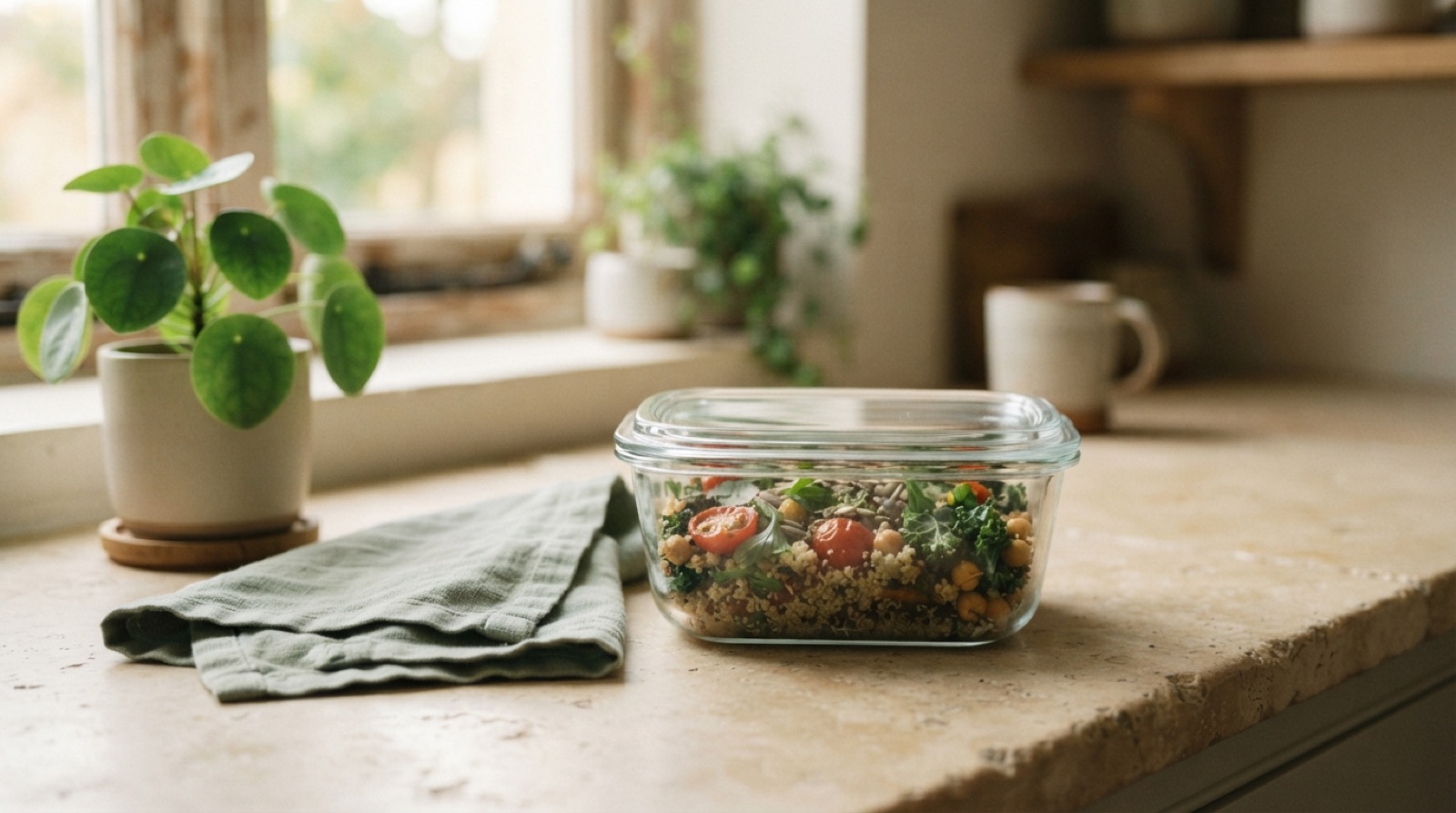
- Glass and ceramic are the reliable answers, and you almost certainly already own both. Tempered glass containers and plain ceramic bowls and plates handle microwave heat without releasing plastic particles or additives, which is why we default to them for reheating and cooking. Cover food with a plate or a piece of unbleached parchment rather than plastic film to avoid spatter, since the film is the plastic most likely to touch hot food directly. If you want dedicated containers for the job, tempered-glass storage sets move straight from fridge to microwave, and we cover choosing them in our guide to the best glass food storage. The whole point is that once your reheating happens in glass or ceramic, the question of whether a given plastic is safe to microwave stops mattering.
Sources we cited on this page.
- 01Hussain et al. 2023, Assessing the release of microplastics and nanoplastics from plastic containers and reusable food pouches, Environmental Science and Technology
- 02US Food and Drug Administration, Microwaving food in plastic: Data and safety
- 03US National Institute of Environmental Health Sciences, Bisphenol A (BPA)
- 04European Food Safety Authority, Bisphenol A: EFSA updates risk assessment (2023)
The PlasticFreeLab Team
A small group of researchers and writers cutting through the noise around non-toxic living. We read the studies, read the labels, test the products. We update our recommendations as the science evolves. We do not accept payment for product placement, we disclose every affiliate relationship, and we name the brands we reject.
Related in this hub.
- The Comparison14 min
Best Glass Food Storage Containers of 2026, Ranked
Kitchen · We ranked 8 glass food storage sets on glass type, lid safety, and seal quality, with FDA and NIH sources and one we'd skip.
- The Guide11 min
Endocrine Disruptors (EDCs): What They Are, How to Limit
Microplastics · What endocrine disruptors are, the main classes like BPA and phthalates, how they affect hormones, who is most at risk, and how to lower exposure.
- The Explainer9 min
What Is BPA? And Is 'BPA-Free' Actually Safer?
Microplastics · What BPA is, where it hides, how the FDA and EFSA disagree, and why 'BPA-free' often just means a substitute that may be no safer.
- The Explainer11 min
How to Avoid Microplastics: 9 Changes That Matter
Microplastics · You cannot avoid microplastics entirely. You can cut your largest exposures. Here are the nine changes that move the numbers, ranked by evidence.
Get the Kitchen Swap Audit.
A printable checklist of 50+ kitchen items, each ranked swap now / swap eventually / don't bother. Free. Delivered instantly.
By subscribing, you agree to our Privacy Policy. One calm email a week. Unsubscribe anytime.
50+ items