
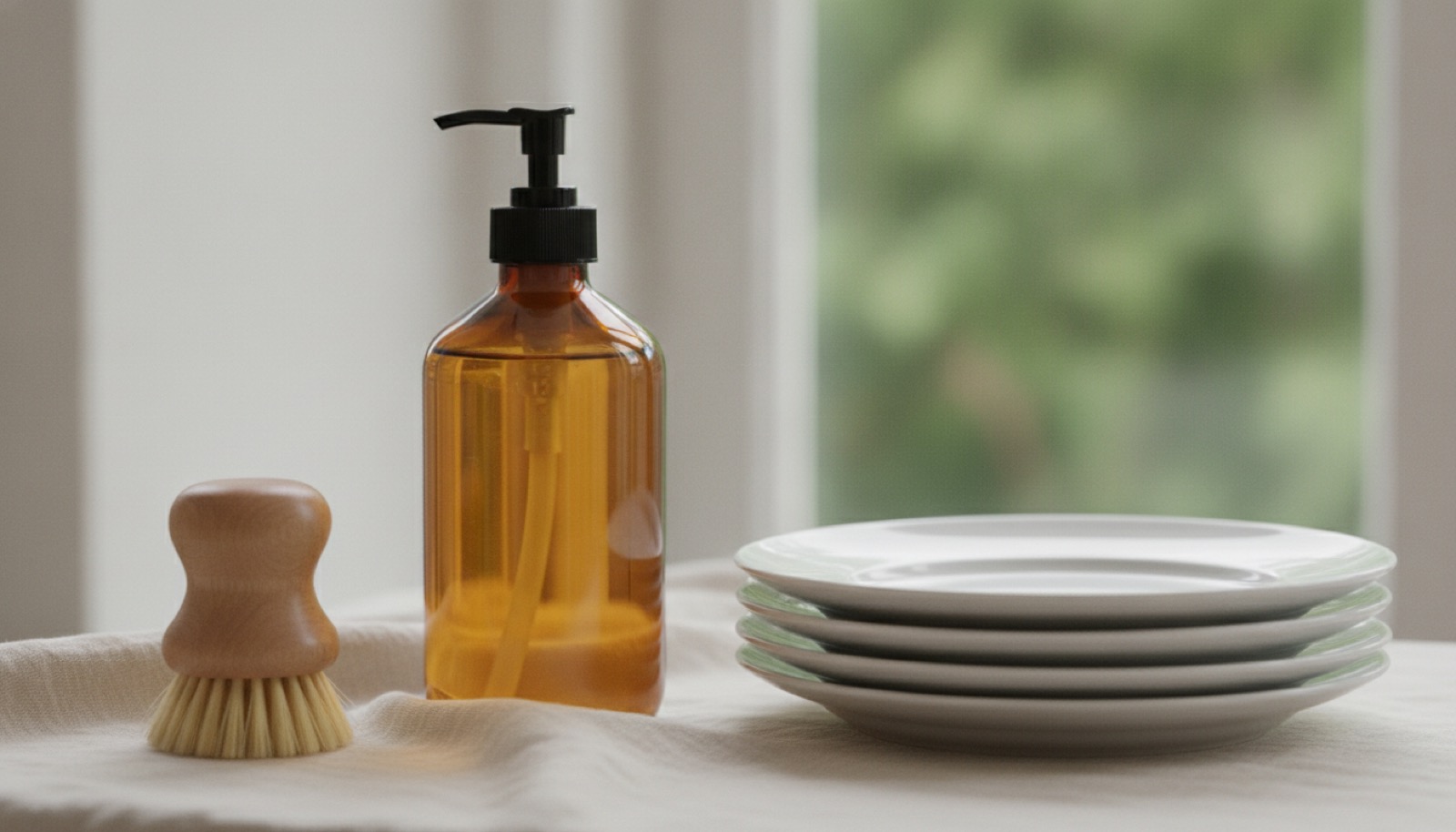
Bestes schadstoffarmes Spülmittel
Wir haben schadstoffarme Spülmittel nach Transparenz der Inhaltsstoffe, Duft, Fettlösekraft und Preis-Leistung gerankt, mit Quellen von EPA und FDA und einem, von dem wir abraten.
Von Das PlasticFreeLab-TeamAktualisiert am 29. Juni 202612 Min. Lesezeit
Hinweis·PlasticFreeLab testet und empfiehlt unabhängig. Über einige unserer Verlinkungen erhalten wir gelegentlich eine Provision – sie hat keinerlei Einfluss auf unsere Bewertungen.
So kommt 88/100 zustande.
Branch Basics Dish Soap
Branch Basics hält die Rezeptur kurz, vollständig offengelegt und wirklich duftfrei, ohne Farbstoffe oder synthetische Konservierungsmittel, und löst alltägliches Fett dennoch gut. Es ist schonend zu den Händen, was die tägliche Realität des Handspülens ist, und die Transparenz ist die beste der Kategorie. Für die meisten Haushalte, die nach der schadstoffarmen Option suchen, ist es die am einfachsten zu empfehlende Flasche.
Was wir kaufen würden, in dieser Reihenfolge.
- 01Beste Wahl insgesamt89
Branch Basics Dish Soap
Eine kurze, vollständig offengelegte pflanzenbasierte Rezeptur ohne synthetischen Duft, Farbstoffe oder Konservierungsmittel und mit einem wirklich duftfreien statt maskierten Profil. Sie löst alltägliches Fett zuverlässig und ist über einem Spülbecken voller Geschirr bemerkenswert schonend zu den Händen, was für etwas täglich Benutztes mehr zählt, als man erwartet. Stark eingebranntes Fett braucht weiterhin Einweichen. Die Transparenz und die Hautfreundlichkeit machen es zur einfachsten Empfehlung hier.
WerbungCheck Amazon - 02Bestes Mehrzweckmittel87
Dr. Bronner's Sugar Soap (Lavender)
Eine Zuckerseife im Castile-Stil mit vollständig benannter, biozertifizierter Zutatenliste und einer Basis aus Kokos und Decylglucosid, die Geschirr, Hände und allgemeine Reinigung bewältigt. Die beduftete Variante nutzt ätherische Öle statt synthetischen Duft, und eine duftfreie Baby-Option existiert für empfindliche Nutzer. Sie ist konzentriert, sodass wenig viel bewirkt, und die Kosten pro Anwendung sind niedrig. Sie schäumt weniger als ein herkömmliches Spülmittel, was kosmetisch statt funktional ist, doch sie ist die beste Wahl für eine Flasche für mehrere Aufgaben.
WerbungCheck Amazon - 03Bester Preis-Tipp84
ECOS Dishmate Dish Soap
Ein EPA-Safer-Choice-zertifiziertes Mittel, das leicht zu finden und eines der günstigsten sauberen Optionen pro Flasche ist. Die Free-&-Clear-Variante ist duftfrei und farbstofffrei, mit einer deklarierten pflanzenbasierten Tensidbasis. Die Fettlösekraft ist ausreichend statt herausragend, daher eignet es sich am besten für leichte bis normale Mengen und Vielspüler, die niedrige Kosten und breite Verfügbarkeit schätzen. Ein sinnvoller, erschwinglicher Einstieg in duftfreies Spülmittel, das dennoch eine aussagekräftige Zertifizierung trägt.
WerbungCheck Amazon - 04Am plastikärmsten85
Blueland Dish Soap (refillable)
Ein Nachfüllsystem rund um eine Tablette oder ein Pulver, das Sie in eine wiederverwendbare Flasche mischen, was das Einwegplastik dieser Kategorie beseitigt. Die Rezeptur verzichtet auf synthetischen Duft und Farbstoffe und legt ihre Inhaltsstoffe offen. Die Reinigung ist solide bei alltäglichem Schmutz und schonend zu den Händen. Der Kompromiss ist das kleine Ritual des Nachfüllens, und die Fettleistung ist gut statt industriell. Eine starke Wahl, wenn das Vermeiden von Verpackungsabfall Ihnen ebenso wichtig ist wie die Rezeptur selbst.
WerbungCheck Amazon - 05Am breitesten erhältlich82
Seventh Generation Free & Clear Dish Liquid
Duftfrei und farbstofffrei, USDA Certified Biobased und in nahezu jedem Lebensmittelgeschäft vorrätig, was sein Hauptvorteil ist. Die Zutatenliste ist offengelegt und die Tenside sind pflanzlich. Die Fettlösekraft ist bei normalen Mengen ordentlich, einen Schritt unter den Spitzenreitern bei starkem Fett. Es ist die vernünftige Wahl, wenn Sie ein sauberes, duftfreies Spülmittel beim normalen Einkauf greifen möchten, ohne online zu bestellen, auch wenn es nicht die transparenteste oder leistungsstärkste Option hier ist.
WerbungCheck Amazon
Namentlich genannt, nicht angedeutet.
Conventional 'antibacterial' scented dish soap
Würden wir meiden58Dies steht stellvertretend für die grell gefärbten, stark beduftenden, antibakteriellen Spülmittel, die die meisten Regale füllen. Die vermeidbaren Punkte sind synthetischer Duft, die häufigste Ursache kosmetischer Kontaktallergien und eine eingeatmete VOC-Quelle über einem Spülbecken; zugesetzte Farbstoffe, die nichts bewirken; und antibakterielle Stoffe, die die FDA in Handseifen mangels nachgewiesenen Nutzens eingeschränkt hat und die dem Geschirr keinen Reinigungswert hinzufügen. Nichts davon ist akut gefährlich, doch es gibt keinen Grund, Duft, Farbstoff und ein unnötiges Antimikrobikum zu wählen, wenn transparente Alternativen ebenso gut reinigen.
So ist dieser Vergleich entstanden
- Wonach wir ausgewählt haben
- Offengelegte Materialien, unabhängige Zertifikate, Haltbarkeit im realen Kochen, unabhängige Schadstoffmessungen, sofern verfügbar.
- Wie wir bewertet haben
- Herstellerunterlagen, Behördendokumente, begutachtete Veröffentlichungen und praktische Dauertests. Wir lesen die Etiketten und die Belege, nicht die Pressemitteilungen.
- Wer uns widerspricht
- Wir formulieren in jedem Vergleich die Gegenposition möglichst stark aus und nennen die Marke, die wir beinahe gewählt hätten – samt dem Grund, warum nicht.
- Was unsere Meinung ändern würde
- Neue unabhängige Labortests, eine Reformulierung durch eine gelistete Marke oder ein begutachteter Befund, der unserer aktuellen Begründung widerspricht.
Was uns am häufigsten gefragt wird.
- Was macht ein Spülmittel „giftig“ oder nicht?
- Für die meisten ist gängiges Spülmittel in keinem sinnvollen Sinn giftig, denn es wird vom Geschirr abgespült und stark verdünnt verwendet. Die echten, belegten Punkte sind enger: synthetisches „Duftgemisch“, die häufigste Ursache kosmetischer Kontaktallergien in der dermatologischen Literatur und als ein nicht deklariertes Wort gelistet; Farbstoffe, die nichts beitragen; antibakterielle Stoffe wie Triclosan, die die FDA in Handseifen mangels Nutzens eingeschränkt hat; und Schärfe, die die Haut beim täglichen Handspülen reizt. Ein schadstoffarmes Spülmittel zu wählen heißt vor allem, Duft und unnötige Zusätze zu meiden, nicht Gift zu entkommen.
- Sollte ich mir Sorgen wegen 1,4-Dioxan im Spülmittel machen?
- Es lohnt sich zu verstehen, aber nicht zu beunruhigen. 1,4-Dioxan ist kein zugesetzter Inhaltsstoff; es ist eine Spurenverunreinigung, die bei der Herstellung bestimmter ethoxylierter Tenside entstehen kann, die in einigen Reinigungsmitteln verwendet werden, und die FDA merkt an, dass die Werte gesunken sind, als die Hersteller einen Vakuum-Strippingschritt verbesserten. Bei einem Produkt, das Sie vom Geschirr abspülen, ist die alltägliche Belastung gering. Rezepturen zu wählen, die ihre Tenside offenlegen oder eine EPA-Safer-Choice-Zertifizierung tragen, ist ein sinnvoller Weg, es zu minimieren, ohne sich über eine bereits rückläufige Verunreinigung den Kopf zu zerbrechen.
- Reinigt antibakterielles Spülmittel besser?
- Nein, und das ist gut belegt. Die FDA entschied 2016, dass Hersteller nicht nachgewiesen hatten, dass antibakterielle Seifen für den täglichen Gebrauch wirksamer seien als gewöhnliche Seife und Wasser, und verbot mehrere antibakterielle Stoffe einschließlich Triclosan aus rezeptfreien Handseifen. Die mechanische Wirkung von Seife und Wasser entfernt unabhängig davon den Großteil der Keime und Speisereste vom Geschirr. Ein Antimikrobikum hinzuzufügen bringt keinen Reinigungsnutzen und einen weiteren Inhaltsstoff ohne Zweck, weshalb wir „antibakteriell“ auf einem Spülmittel als Grund zum Meiden statt zum Kaufen behandeln.
- Lösen pflanzenbasierte Spülmittel wirklich Fett?
- Die besseren tun das, auch wenn es bei stärkstem Fett eine ehrliche Lücke gibt. Pflanzliche Tenside wie Decylglucosid und kokosbasierte Reiniger bewältigen alltägliches und mäßiges Fett gut, und unsere Spitzenwahlen waren bei normalen Mengen zuverlässig. Wo herkömmliche Rezepturen noch einen Vorsprung haben, ist industrielles, eingebranntes Fett, das jede schonende Seife mit einem heißen Einweichen lösen muss. Für typisches Geschirrspülen zu Hause ist ein transparentes pflanzenbasiertes Mittel mehr als ausreichend; entfetten Sie regelmäßig schwere Bräter, planen Sie Einweichen ein, statt von einem einzigen Spritzer alles zu erwarten.
- Bedeutet EPA Safer Choice auf einem Spülmittel etwas?
- Ja, es ist ein nützliches Signal statt einer Garantie. EPA Safer Choice ist eine freiwillige Zertifizierung, die jeden Inhaltsstoff eines Produkts anhand von Sicherheitskriterien prüft, also ein aussagekräftiges Sieb, besonders bei Tensid- und Verunreinigungsfragen wie 1,4-Dioxan. Es behandelt weder Duftpräferenzen noch die Leistung, ergänzen Sie es daher um eine klar benannte Zutatenliste und eine duftfreie Wahl, wenn Ihnen das wichtig ist. Ein Etikett, das seine Tenside und seinen Duft benennt, sagt mehr aus als jedes einzelne Siegel, doch ein Safer-Choice-Zeichen ist ein echtes, kriteriengestütztes Plus.
Neue unabhängige Labortests, die unserer aktuellen Reihenfolge widersprechen. Eine stille Reformulierung einer Top-Empfehlung, die ein offen gelegtes Zertifikat verliert. Eine begutachtete Veröffentlichung, die das Sicherheitsbild zu einem der oben genannten Materialien verändert. Wir aktualisieren diese Seite innerhalb einer Woche und kennzeichnen, was sich geändert hat.
Quellen, die wir auf dieser Seite zitieren.
Das PlasticFreeLab-Team
Eine kleine Gruppe aus Recherchierenden und Schreibenden, die durch das Rauschen rund um schadstoffarmes Leben hindurchhört. Wir lesen die Studien, lesen die Etiketten, prüfen die Produkte – und passen unsere Empfehlungen an, sobald die Wissenschaft sich weiterbewegt. Wir nehmen kein Geld für Produktplatzierungen, legen jede Affiliate-Beziehung offen und nennen die Marken, die wir ablehnen.
Verwandtes in dieser Rubrik.
- Der Leitartikel19 Min.
Der Ratgeber für ein schadstoffarmes Zuhause: woher Innenraumbelastungen wirklich kommen
Wohnen · Innenraumluft ist oft stärker belastet als die Außenluft. Hier ist, was die Belege zu Matratze, Reinigungsmitteln, Kerzen und Luft sagen, und in welcher Reihenfolge Sie das ohne Panik angehen.
- Der Vergleich14 Min.
Die besten ökologischen Reinigungsmittel 2026 im Test
Wohnen · Wir haben 8 ökologische Reinigungsmittel auf Sicherheit, Leistung und ehrliche Etiketten geprüft, mit Quellen von EPA und EWG sowie einem Produkt, das wir meiden würden.
- Der Vergleich14 Min.
Bestes ökologisches Waschmittel 2026, getestet und bewertet
Wohnen · Wir haben 8 ökologische Waschmittel nach Transparenz, Duftstoffen, Reinigungskraft und Preis bewertet, mit Quellen von EPA, FDA und EWG sowie einem zum Meiden.
- Der Vergleich14 Min.
Die besten Glas-Vorratsdosen 2026: getestet und bewertet
Küche · Wir haben 8 Glas-Vorratsdosen-Sets nach Glasart, Deckelsicherheit und Dichtigkeit bewertet, mit Quellen von FDA und NIH und einem, das wir meiden würden.
Holen Sie sich das Küchen-Audit.
Eine druckbare Liste mit 50+ Küchenartikeln, jeweils eingeordnet als jetzt tauschen / später tauschen / kein Aufwand. Kostenlos. Sofort zugestellt.
Mit der Anmeldung stimmen Sie unserer Datenschutzerklärung zu. Eine ruhige E-Mail pro Woche. Jederzeit kündbar.
50+ Artikel